Precious metals
Platinum and Gold for Engagement Rings
Choose the metal colour you enjoy wearing, then compare its alloy, finish and care. Platinum is naturally white; white gold is often rhodium-finished; yellow and rose gold offer warmer tones. Across all three gold colours, 14K and 18K describe gold content rather than a complete alloy recipe.
How do platinum and the three gold colours compare?
Start with the colour you enjoy wearing, then consider the surface finish, feel and later care. Platinum and white gold offer a white-metal look; yellow and rose gold bring warmer tones.
White gold combines gold with other metals, which can include palladium or nickel. The mixture helps create its colour and properties. GIA explains the alloy.
Copper gives rose gold its pink colour; silver can also be part of the alloy. The precise recipe varies. The World Gold Council explains gold colours and composition.
Yellow gold is also an alloy in 14K and 18K jewellery. Copper, silver and sometimes zinc can be part of the mixture. GIA compares the three gold colours.
Platinum is naturally white and does not need rhodium plating for that colour. Wear can produce a softer finish called patina. Platinum Guild International describes the finish.
| Metal | Colour and finish | A useful starting point for your choice |
|---|---|---|
| Platinum | Naturally white; wear can bring patina. | You prefer a naturally white metal and want to discuss patina or a higher shine. |
| White gold | A gold alloy, often finished with white rhodium. | You prefer white gold and want to understand any future replating. |
| Yellow gold | A warm yellow gold alloy. | You prefer a yellow tone and want to compare 14K and 18K alloys and finishes. |
| Rose gold | A gold alloy with a copper-influenced pink tone. | You prefer a pinker tone and want to compare the actual alloy colours. |
GIA notes platinum's greater density relative to gold. The finished weight also depends on the alloy, size and construction, so compare similar designs when judging the feel. Read GIA's metal comparison.
What is in 14K and 18K white, yellow and rose gold?
Karat describes gold content. Nominally, 14K is about 58.3% gold and 18K is 75%; the balance consists of other alloying metals. The following table gives general composition categories. World Gold Council: gold content and colours; GIA: gold-alloy ingredients.
| Gold type | Gold content | Other metals, by balance | Examples of alloying metals |
|---|---|---|---|
| 14K white gold | About 58.3% | About 41.7% | Palladium, silver, nickel, copper or zinc, depending on recipe. |
| 18K white gold | 75% | 25% | Palladium, silver, nickel, copper or zinc, depending on recipe. |
| 14K yellow gold | About 58.3% | About 41.7% | Copper, silver and sometimes zinc. |
| 18K yellow gold | 75% | 25% | Copper, silver and sometimes zinc. |
| 14K rose gold | About 58.3% | About 41.7% | Copper, often with silver. |
| 18K rose gold | 75% | 25% | Copper, often with silver. |
14K is also commonly marked 585, meaning 58.5% gold; 18K commonly uses 750. Platinum uses its own fineness notation: Pt950 means 950 parts platinum per thousand. A fineness number identifies precious-metal content, while the full specification identifies the other ingredients. Gold fineness; platinum markings.
A palladium-based example in an industry guide does not establish the composition of a particular ring. For your design, confirm the alloy for the band and setting, along with any plating. That gives you more useful information than the colour and karat alone.
How do rhodium and patina change with wear?
Rhodium is often used as a surface finish on white gold. That coating gradually wears and may need renewing. GIA describes this upkeep. Confirm whether your proposed ring is plated and what future replating would involve.
Platinum's patina is a change in surface appearance. You may enjoy that softer look or prefer a higher shine. PGI discusses both preferences. Describe the finish you want before commissioning the ring and before any later refinishing work.
For yellow and rose gold, confirm the selected alloy's colour and finish rather than applying a white-gold replating routine automatically. Request care instructions for the completed ring. The timing and cost of any inspection, refinishing or replating should be discussed for that piece.
How do the metal and setting work together?
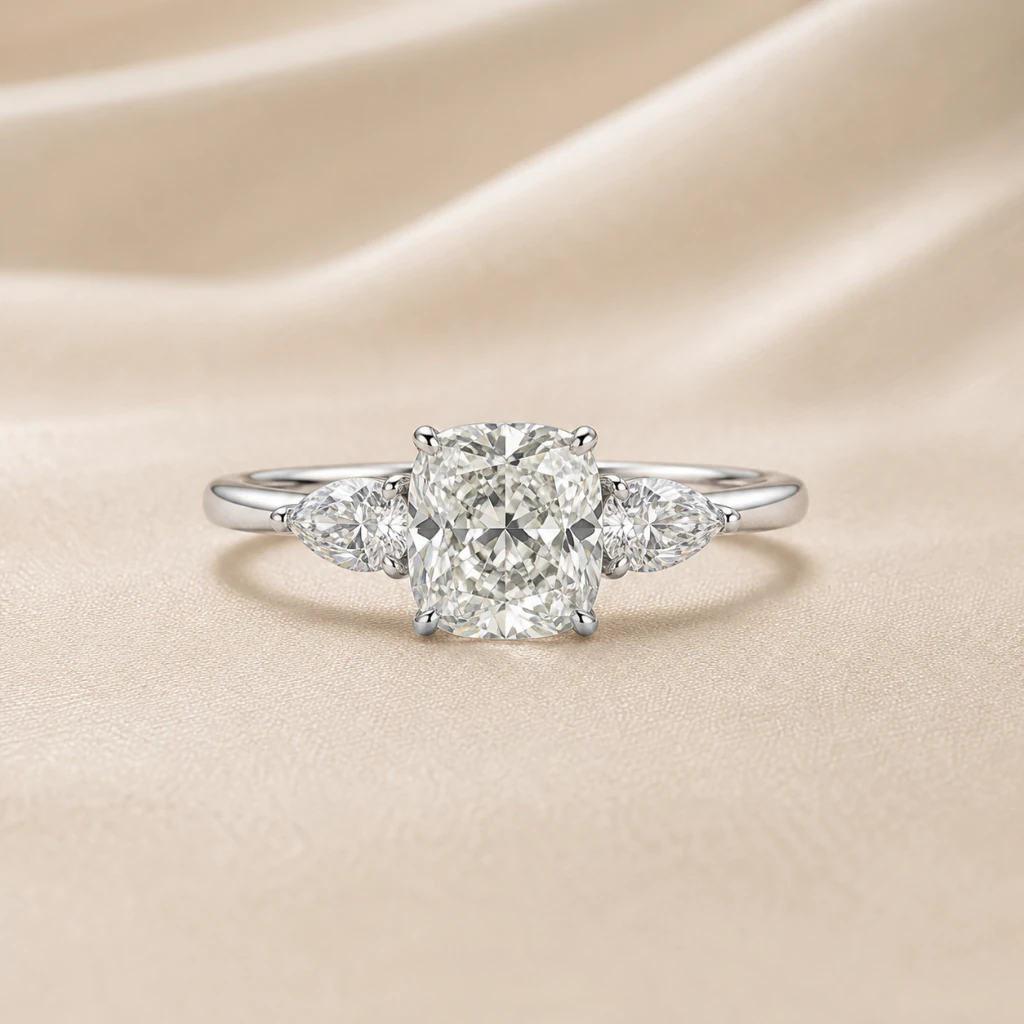
A diamond reflects its surroundings, including the band and prongs. Metal colour can therefore influence the stone's appearance in the finished ring. GIA explains this effect. Compare the whole design when choosing a white, yellow or rose setting.
GIA also considers lifestyle and activity level when recommending platinum rings. See its approach. Tell us when you expect to wear your ring, how you use your hands and which design details matter to you.
Discuss the band profile, setting height and stone-setting construction together with the alloy. Ask why a particular combination is proposed for your design. General claims about a metal's strength cannot replace that discussion.
For the stones, our lab-grown diamond and IGI guide explains documentation and report coverage. Julea's diamonds are lab-grown with IGI certification; your quote confirms the selected diamonds and their details.
What if I have a known metal sensitivity?
GIA advises people allergic to nickel to avoid white gold containing nickel. Read its guidance.
Tell us which metal concerns you before the proposal is finalised. Request composition details for the band, setting and relevant joining components. White, yellow, rose, 14K or 18K are useful descriptions, but none supplies a complete ingredient list. Confirm any nickel-free requirement against the actual materials selected for your ring.
How should I compare price and later care?
Compare current quotes for the same diamond selection, design and ring size. Changing the metal can change the proposed construction or finish as well. Ask for those differences to be itemised so you can judge the complete piece and its upkeep.
| Item | What to confirm |
|---|---|
| Alloy | The fineness and alloy specified for the band and stone setting. |
| Finish | The agreed colour, polish or texture, and any plating. |
| Configuration | The same diamonds, ring size and design details in each quote. |
| Later work | Applicable inspection, refinishing, replating or resizing options and their charges. |
| Complete amount | The services, tax and delivery costs included or additional. |
For platinum alterations, GIA advises matching the original alloy. See its alloy guidance. Keep your agreed metal specification with your order details.
A worn ring needs assessment before refinishing; GIA includes a platinum example unsuitable for that work. Read its refinishing guidance. Confirm the options for your construction rather than assuming every ring can be polished or resized in the same way.
Which metals can I explore with Julea?
Our released catalogue includes 14K and 18K white and rose gold, plus 14K yellow gold. Explore Arabella in 14K white gold, Beatrice in 18K white gold, Elodie in 18K rose gold and Colette in 14K yellow gold. These are design visualisations; your proposal confirms the materials and finish for the piece you commission.
For 18K yellow gold or platinum, discuss availability and the exact alloy in a bespoke proposal. We can discuss a gold or platinum setting and confirm the design, alloy, finish, size and complete price in your quote.
- Choose the colour and finish you would like to explore.
- Discuss your routine and any known metal sensitivity.
- Confirm the actual alloy and setting construction.
- Keep the agreed care options and quotation details with your order.
Sources and review
Reviewed 21 October 2026. Technical explanations use the sources below; Julea's designs and quotation process are first-party business information.
- GIA: Choosing Between White Gold, Platinum, Palladium, and Silver
- GIA: Identify and Characterize Platinum Alloys
- Platinum Guild International: How to Clean and Care for Platinum Jewelry
- GIA: Recommending Platinum Rings Based on Customer Lifestyle
- GIA: Techniques for Refinishing Worn Platinum Jewelry
- World Gold Council: Gold Jewellery: Colour, Carat and Purity
- GIA: Diamond Engagement Ring Setting: How Metal Affects Diamond Color Appearance
- GIA: Buying Guide for White, Yellow and Rose Gold Engagement Rings
Read how we prepare our guides or send a question or correction.
Begin with the details.
Tell us the design you have in mind. We will confirm the selected diamonds, IGI documentation, metal, size and price in your personal quote.
Discuss your design