Choosing your ring
Why Choose a Lab-Grown Diamond Ring?
A lab-grown diamond ring can be a thoughtful choice when you want diamond beauty, flexibility within your budget and a clearly disclosed origin. Lab-grown diamonds are real diamonds; the selected stone, cut, setting and workmanship shape the ring you wear. Start with the design you love, then confirm its diamonds, IGI documentation and complete price in your personal quote.
What makes a lab-grown diamond a real diamond?
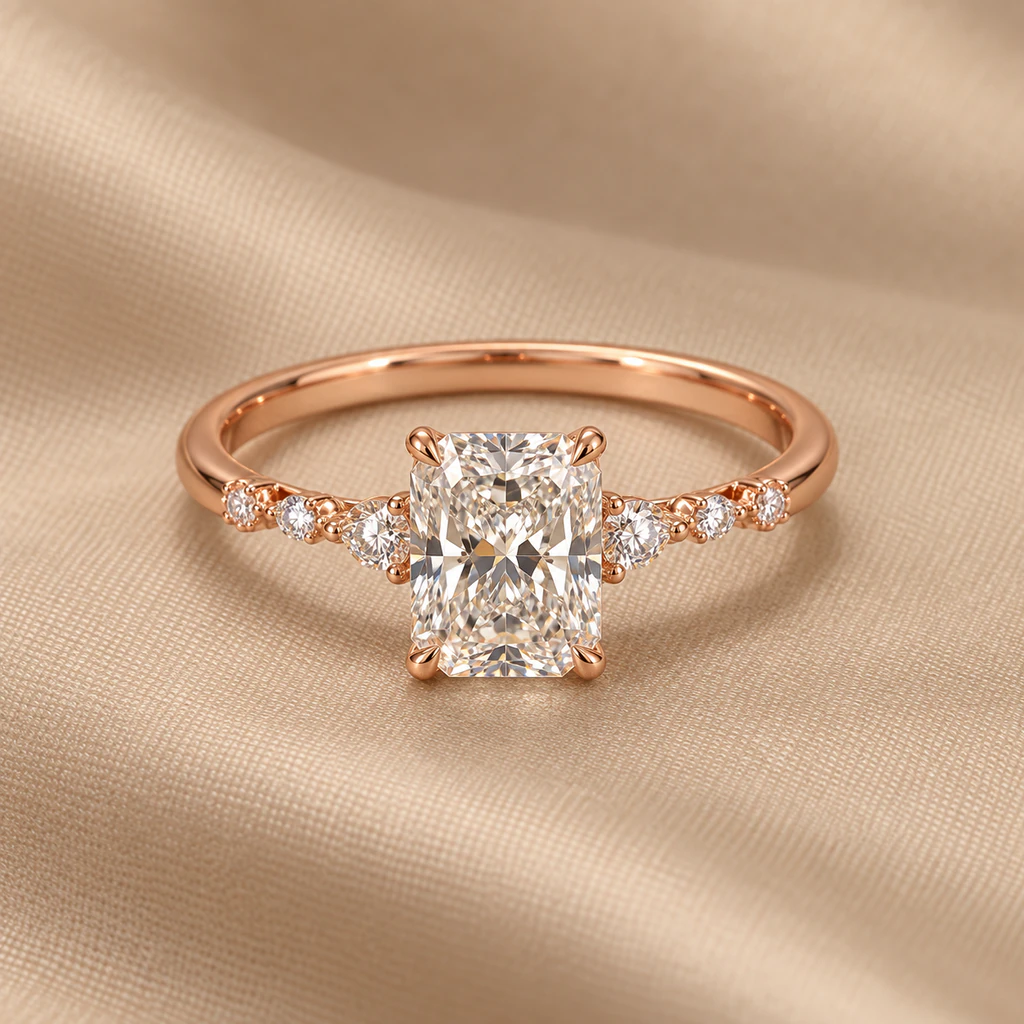
A ring begins with something you want to wear: a shape you keep returning to, a setting that feels right on your hand and a design that marks your commitment. Choosing a lab-grown diamond gives you another way to bring that ring into focus.
Lab-grown diamonds are real diamonds. GIA explains that they have essentially the same chemical, physical and optical properties as natural diamonds. Their growth origin is different. Read GIA's explanation.
The appearance of your ring still depends on the particular diamond and design you choose. Compare the selected stone's characteristics and how it works with the setting, rather than treating lab-grown as a single quality level. Our diamond and IGI guide explains the documentation in more detail.
How can lab-grown give me more choice within my budget?
IGI explains that lab-grown diamonds and jewellery typically cost less than comparable natural diamonds. See its consumer guide. That price difference can create room to explore the features you care about, with the actual options confirmed in a complete quotation.
You might keep your spending lower for a look you love, explore a particular stone size, or put more attention into the setting and design details. Start with a comfortable budget and your priorities. There is no need to choose the largest diamond or spend to the top of your limit for the ring to feel right.
| Your priority | What to explore | What to confirm |
|---|---|---|
| Comfortable spending | A diamond look and design that fit your chosen limit. | The complete price and agreed inclusions. |
| Presence on the hand | Stone shape, dimensions, proportions and setting. | The actual selected diamond and how it sits in the design. |
| A personal design | Metal colour, band profile and details you enjoy. | The agreed construction, materials and size. |
| A lab-grown origin | A diamond created through a controlled growth process. | Lab-grown identification and evidence for any additional sourcing claims. |
For Julea, the design page is your starting point. Shown diamond weights and starting prices are illustrative, and the pictured size may cost more. Your personal quote confirms the configuration and final amount. Our Australian cost guide helps you compare complete quotations.
What does lab-grown tell me about sourcing?
A lab-grown diamond is created through a controlled growth process, rather than recovered from a diamond deposit. GIA describes the HPHT and CVD methods used to grow diamonds. Learn how they are formed. For someone who prefers a grown origin, that is a clear and meaningful choice.
Broader sourcing claims need their own evidence. The ACCC advises businesses to make accurate environmental claims and provide accessible evidence supporting them. Read its guidance. A lab-grown origin alone does not establish a producer's energy use, working conditions or the impact of a finished ring, including its metal.
If those details matter to your choice, ask where the diamond was grown, where it was cut and polished, and what documentation supports any specific supplier claim. Treat renewable-energy, emissions and traceability statements as questions about the actual supply chain and product. Clear answers let you choose on the basis of the information available.
How can I make the ring feel personal?
The meaning of a ring can come from your commitment and the choices you make together. Consider the outline you love, the balance of the stones, the band profile and the colour of the metal you enjoy wearing. Ask the wearer about their preferences when you can; a beautiful ring should feel like theirs.
Explore Elodie's radiant solitaire with pavé in 18K rose gold, Arabella's knife-edge solitaire in 14K white gold or Beatrice's three-stone composition in 18K white gold. Use these as design directions to discuss, rather than price tiers or a promise that every variation is available.
The platinum and gold guide can help you explore colour, finish and care before deciding on the details of a proposal.
What can I expect from wear and future value?
Diamond is highly resistant to scratching, but it can chip or break under impact. GIA distinguishes scratch resistance from toughness and explains how a setting can help protect vulnerable points and edges. Read its care guidance. Discuss your routine and the proposed construction, and ask for care instructions for the completed ring.
Choose the ring for the design, enjoyment and meaning you want from it. IGI cautions that buyers typically cannot recover the original purchase cost of either natural or lab-grown diamonds. See its explanation. A purchase price should not be treated as a promised resale return; confirm any actual trade-in terms separately if they form part of an offer.
Keep the agreed specifications and order details, and confirm the conditions of any sizing, maintenance or repair service. Those practical details belong with the ring you choose.
What does IGI documentation add to my decision?
Julea's diamonds are lab-grown with IGI certification. IGI documentation identifies and records diamond characteristics; assessments of mounted stones have limits. IGI explains its reports. Your quote confirms the selected diamonds, report details and the stones covered. That documentation helps you check the proposal; it does not establish every sourcing claim or guarantee future value.
Our catalogue visualisations illustrate designs. When actual-stone photographs or video are available, ask which selected stone they show and how they relate to your proposal. A design illustration and a grading report answer different questions, so use each for the information it provides.
Our IGI documentation guide takes you through report matching and coverage. Keep the agreed documentation with your order details.
How do I choose a ring with Julea?
Begin with a design you love and tell us which details matter most. A clear proposal brings those preferences together with the selected diamonds, documentation, materials and complete price.
- Choose a design direction and a comfortable budget to discuss.
- Explore the diamond shape, setting, metal colour and size.
- Confirm the selected diamonds, their IGI details and the report coverage.
- Review the complete price, inclusions, payment terms and estimated timing.
- Ask for any sourcing or care details that are important to your decision.
You can explore the ring collection or start a bespoke discussion. The complete-quote guide explains the details to confirm before an order.
Sources and review
Reviewed 22 October 2026. Technical explanations use the sources below; Julea's designs and quotation process are first-party business information.
- GIA: Is There a Difference Between Natural and Laboratory-Grown Diamonds?
- IGI: Lab Grown Diamonds
- ACCC: Environmental and sustainability claims
- GIA: How to Protect Your Diamond from Chipping
- IGI: Lab Grown vs Natural Diamond
- IGI: Laboratory Grown Diamond Report
Read how we prepare our guides or send a question or correction.
Begin with the details.
Tell us the design you have in mind. We will confirm the selected diamonds, IGI documentation, metal, size and price in your personal quote.
Discuss your design